We need to do something better than a "Secretary of the Arts"

Has anyone stopped to ask what might be good about a "Secretary of the Arts"? I can't see anything beneficial.

Do we need more support for the arts? Definitely for non-profit arts institutions. We need more assistance for regional theaters, and museums and orchestras in smaller cities. Maybe some tax breaks for commercial arts in certain economically troubled areas. (New York City's film office brought a lot of of production work to the city during the city's financial crisis in the late 70's.) Does this kind of support require a cabinet position? I don't think it does. Maybe an Undersecretary of Media and Arts in the Commerce Department.

More importantly we need better arts education in elementary schools. If children are taught to sing, play an instrument, perform in a play, dance and to draw a picture, they are more likely to appreciate the arts as adults. They are more likely to attend the theater, a concert, a museum. They are more likely to bring their own children to the arts to share in their passion.

Do we need a Secretary of the Arts to increase funding for arts education? Maybe an Undersecretary for Arts Education in the Education Department might be appropriate.

But what exactly would a Secretary of Arts deal with - would he oversee the commercial arts (Hollywood, Broadway, the recording industry?) Or the 'fine arts’ only (symphonies, museums, opera and dance companies)? What would be his priority when commercial and fine arts come into conflict?

Would he only deal with giving out support money (like the present National Endowment) or would he also be involved with copyright policy and policing piracy? Would his/her job be to protect the arts industries or to protect the individual artist? Or to protect the consumer of the arts?

Like the present Endowment, an Arts Department would be dictating what is ‘American’ art by what it chose to support. There is no denying the present Endowment sways in the political breeze of whatever administration is in power. Why would a cabinet position be any different?

And while everyone is in the glow of Obama's election and the idea of who he might appoint as a Secretary of the Arts, how about the hypothetical Secretary of Arts appointed by President Palin, eight years from now?

As someone working in the theater, I have seen how helpful government funding can be - the path from Off-Broadway to Broadway is a great example of how government support can produce more jobs, bring more economic benefits to the city and (sometimes) create great theater. But I have also seen government funding used as a form of censorship, frightening producers or museum directors from provocative projects when it’s time to apply for new grants. Moving the arts up to a cabinet position only put the dangers of government funding on a larger stage where politicians are more likely to use it as a medium for their own agendas.

* * * * * * *

In the age of the internet, the arts are in a complete uproar. All assumptions are off - all the paradigms are changing. The internet is also changing the nature of the consumer himself - tastes are changing - musical and visual vocabularies are changing. In such a turbulent time a Secretary of the Arts seems like a quick fix to help preserve some of the institutions that are suffering and disappearing.

But those institutions may have to disappear - or they may have to reinvent themselves as something that better responds to the changed world. Music and theater won’t disappear - but concert halls and Broadway might. Live performances will always occur - but in the future audiences may not even be in the same space.

In this shifting environment, government policy is the last place for the arts to find good ideas.

Instead of a Secretary of the Arts, how about an Arts Lobby, fighting for arts education, support for regional and non-profit institutions, and informing both the politicians and the public how the arts can benefit our society.

How about a Commercial Endowment, where a portion of the taxes normally paid by commercial arts institutions (media companies, movie studios, record companies), get siphoned off directly to the National Endowment to support non-profit institutions.

In the end, I think it’s all about the education - if we expose our children to the arts, they will become hungry for more. Their hunger will find the new forms when they appear.

But first we have to bring our children to the arts in a real, tactile manner. Once you have held an instrument and felt it vibrate from your own manipulation (even for just a few months) you forever hear music differently - you hear it as a musician.
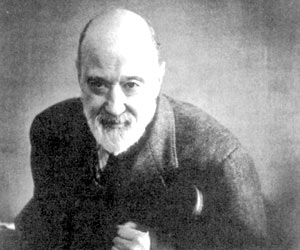
an idle thought about Charles Ives

I've always wondered how Charles Ives plays to non-Americans. As a modernist, I'm sure he's sounds as stark and muscular to a European as he does to me.

But what of the 'Americana' aspect of his music? Ives' use of American hymns and simple folk songs evoke a sense of New England at the dawn of the 20th century - not an idyllic vision, but one where the bucolic greenery mixes with the chaos of a young democracy - outspoken, rough, rude and heartfelt - Whitman's 'barbaric yawp'.

Where Bartok seemed to have taken Hungarian folk music and ingested it whole to become part of his melodic voice, Ives never seems to completely absorb early American music into his voice. There's a ongoing process of synthesizing it all into a style - but the process is never complete - the hymns emerge from the darkness and fade back. The throb of Beethoven's 5th keeps emerging from the Concord Sonata only to be absorbed a few bars later.

It's almost as if Ives heard the simple hymn tune, and felt that all the swirls of atonality were implied by the populace that sang the hymn; he saw a complexity to the American character that joined together the roar of the mob, the untamed cosmos and the voice of quiet belief.

The letter to the N.Y. Times that wasn't printed

If you haven’t seen it, there was a New York Times article about orchestration for the theatre and the economics of having orchestras for Broadway musicals. The article was well informed for the most part, but had some errors. Some of these errors were corrected by a letter from the composer, Stephen Sondheim.

But other errors, those dealing with the actual economics, have not been corrected. In the light of some of the author's conclusions, a letter to the editor was written by Local 802 to simply inform the public of the actual economics of paying for music preparation (orchestraters and copyists) and for orchestral musicians.

For some reason, the Times chose not to publish this letter alongside Mr. Sondheim's letter. But I have been informed that it will be published this weekend (8/31/08) on the Letters page of the Arts & Leisure section. Here is that letter (presented with the permission of Local 802)

To the Editor:
NY Times Arts Section
 
Thanks to Susan Elliot (Off the Stage, What’s Behind the Music, Sunday, August 17, 2008) for describing how glorious a full live orchestra sounds on Broadway and sharing with readers the important creative work of Broadway’s talented orchestrators. The cost of creating the wonderful music of shows like South Pacific or Gypsy each night on Broadway, however, are not as Ms Elliot suggests, “staggering.” For a $8 -$10 million Broadway musical (hardly an unusual budget today) the cost of orchestrating and copying; i.e. putting the music on the stands is typically less than $175,000, or barely 2 %. This is a tiny fraction of what is typically spent on sets, costumes, lighting, etc, which quickly runs into the millions.  And the orchestra costs: As a part of a $120 ticket for a musical like South Pacific, the orchestra costs are about $15, a bargain by any standards and a compelling argument for the full “lush” orchestrations that Ms. Elliot and audiences so love.
 
Mary Landolfi
President, Local 802 AFM

Orson Welles - "F is for Fake" - Chartes

(From the Wikipaedia article about Orson Welles' film, "F is for Fake")

In perhaps the most celebrated segment of the film, treating the power of art and the nature of authorship, Welles narrates a montage sequence of the medieval French landmark, Chartres Cathedral:

"Now this has been standing here for centuries. The premier work of man perhaps in the whole western world and it's without a signature. Chartres. A celebration to God’s glory and to the dignity of man. All that’s left, most artists seem to feel these days, is man. Naked, poor, forked radish. There aren’t any celebrations. Ours, the scientists keep telling us, is a universe which is disposable. You know it might be just this one anonymous glory of all things, this rich stone forest, this epic chant, this gaiety, this grand choiring shout of affirmation, which we choose when all our cities are dust; to stand intact, to mark where we have been, to testify to what we had it in us to accomplish. Our works in stone, in paint, in print are spared, some of them for a few decades, or a millennium or two, but everything must fall in war or wear away into the ultimate and universal ash: the triumphs and the frauds, the treasures and the fakes. A fact of life... we're going to die. 'Be of good heart,' cry the dead artists out of the living past. Our songs will all be silenced - but what of it? Go on singing. Maybe a man's name doesn't matter all that much."