Damn the Whoopers!

I was listening to a live performance of a musical recently - the main character momentarily lost her mind at the end of a song. Her beautifully held note swelled into a full throated scream. A marvelous, frightening moment of theater.

It was followed by "whoo-hoo" and yeah! from the audience. Were they not moved or frightened by what had happened to this character? Were they saying "Yeah! love your mind coming apart, baby"? It was another dramatic moment ruined for the rest of us by the whoopers.

The whoopers (rhymes with 'bloopers') are those audience members who "whoop!" or "yeah" whenever a singer hits a high note and holds it for 4 or more seconds. Usually the whoopers wait till the note is cut off before whooping.

But common practice allows that  if the singers holds the note for 6 seconds or more, whooping is permitted to occur during the held note - however this 'mid-note whooping' requires a louder explosion of enthusiasm when the singer releases their note.

I'm not sure where this practice came from. I suspect it is either from the congregation's interjections during a gospel performance in church, or from the athletic performances of singers on the various 'somebody's got talent' shows. I suspect the latter because the whoop does not seem to be an expression of shared belief ("tell us, sister") but is more a reaction to the purely physical accomplishment of belted volume and length. It is akin to the "score!!" of football, the 'ole' of the bullfight or the cheer from the trading floor at the end of an up-market day.

The whoop in the musical theater is independent of what the character is saying in the lyric. The performer can be revealing a devastating tragedy with their high note, a dramatic realization of a mistake or even a command to another character to be silent. Yet the whoop seems to be mandatory now whatever the dramatic context.

The standing ovation has also become so standard that you feel like a heel if you just sit and clap. I can more readily accept this new practice as my knees have grown stiff from sitting and it's a welcome chance to stretch. But it saddens me a little that the standing 'o' has lost some of its importance.

My favorite standing ovation was when the RSC came to NY to perform Nicholas Nickleby in 1981. I was fortunate enough to attend a Monday performance of both halves (matinee and evening) that had been scheduled for theater professionals on a Broadway schedule. After the dinner break, as the cast entered, the entire audience rose as one with a thunderous ovation at the start of the show. But being professionals, the audience knew the cast was ready to begin and after exactly 15 seconds (as if on a stopwatch) the audience quickly sat down, eager to see the show.

Whooping I fear has become as acceptable and omnipresent for an audience as the standing ovation. But I can't just blame the whoopers. More and more I hear songs for the theater that feature belting for belting's sake. Every song has to end like it's the 11 o'clock number (ask you elders what that is ... shows started later and lasted longer ...) Everything has to end big with an impossibly athletic vocal turn.

A well known composer-lyricist once explained that applause was the punctuation that helped structure the flow of an act. This discussion occurred when someone (in London) had removed all the buttons from the first act of a musical he had written. They felt his 'serious' musical shouldn't have that 'pedestrian' stopping for applause. The buttons to numbers were then all restored to help maintain the structure of the show. The writer and director were careful to use applause for structure (and to give more time for scenery or costume changes.) There was never a sense that 'more applause means audience and critics will like the show better'.

Applause is the proper participation of an audience. It keeps them attentive if they have a moment of making motion and noise. But no one is asking them to vocalize (until now I fear.)

Sometimes NOT getting applause can carry energy forward. Next to Normal takes the risk in the second act of leaving no opportunity for applause until the end. Applause seemed out of place for the subject matter and context. Strong vocal performance is tied to lyric and meaning not occurring for its own sake.

One can manipulate the whoopers to react like Pavlov's dogs - they sit there waiting to unleash their own vocal cords. But the geschrei for geschrei's sake alienates the rest of us. We prefer to be moved by the meaning and thought that comes with good writing through performance. THAT actually is the big whoop.

WSS - the role of Tony

Loved the new WSS and all the performances, etc. - but it got me thinking. Is the role of Tony next to impossible to play? Because of the songs he's expected to be a tender-hearted young man suddenly filled with love. But his history as a gang member (and with a violent streak in the new version) belies that romantic side. Yes, the new script tried to reconcile the two contrasting sides of Tony with more back story. But the difficulty (for me) lies in the lyrics - so much more 'heart on the sleeve' than Sondheim's later writing. Are these the words that would come out of the mouth of a former gang leader? Sondheim sometimes expressed self-criticism of his lyrics to "I Feel Pretty", saying that the language didn't fit that of a young immigrant girl. I just wonder if there's also an inherent difficulty to the role of Tony due to the conflict of story and language.

I recently watched the source material (the Globe Theater's production of Romeo and Juliet.) Romeo is a romantic from the very start (at first obsessed with a different girl.) The conflict of the two families swirls around him, but he seems to be above the conflict, unlike his friend Mercutio (the Riff of the original). Like WSS, the romance with Juliet seems to be in another world than the street, with the conflict inevitable. The friendship between Romeo and Mercutio is based more on verbal sparring and not on past mutual suffering.

I'm not saying WSS is deeply flawed - it remains one of the touchstones of musical theater. But I wonder if the transformation of Tony happening before the play begins (or as it starts) asks too much for an actor to pull off. Ansel Elgort gives a wonderful performance and Tony Kushner's script tries to make more sense of the transformation. But it still troubled me while watching.

by Rumi

A moth flying into the flame says
with its wingfire, Try this.

The wick with its knotted neck broken
tells you the same. A candle as it diminishes
explains, Gathering more and more is not the way. Burn,
become light and heat and help. Melt.

The ocean sits in the sand letting its lap fill
with pearls and shells, then empty.
A bittersalt taste hums, This.

The phoenix gives up on good-and-bad, flies
to rest on Mount Qaf, no more burning and rising
from ash. It sends out one message.

The rose purifies its face, drops the soft petals,
shows its thorn, and points.

Wine abandons thousands of famous names,
the vintage years and delightful bouquets,
to run wild and anonymous through your brain.

The flute closes its eyes and gives its lips
to Hamza’s emptiness.

Everything begs with the silent rocks for you
to be flung out like light over this plain,
the presence of Shams

translated by Coleman Barks

Shams - Shams-i-Tabrīzī (1185–1248) was a Persian poet who is credited as the spiritual instructor of Rumi and is referenced with great reverence in Rumi's poetry.


15030048985_2888598898_b.jpg

Do the Tony Awards actually do what they're trying to do?

I've long resigned myself to the Tony orchestration award being given pre-broadcast along with the other design awards. In fact, I wish the design awards were given the night before at a nice dinner - no broadcast,  no commercials - no performances even. Just a bunch of theater professionals getting to hang out, have a few drinks and tell some production stories. And of course, having the time to restore the Sound Design award and the long, long forgotten Music Director award.

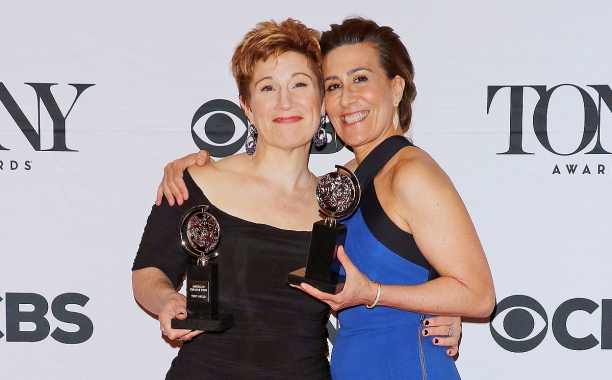
Imagine my surprise this year to see the musical writing awards (won by Lisa Kron and Jeanine Tesori) presented pre-broadcast. Have we so devalued the worth and contribution of writing (and composing) in the arts, that we relegate it to being a technical skill? Are we so hooked on celebrity as the only thing to sell on this night, that the less familiar names of authors are not worth honoring? Has this night become solely a vehicle for advertising Broadway?

If that's the case, it might be wise to separate the function of industry honors from that of industry publicity. Let's have the Tonys create a "Broadway Presents" night for CBS where musicals (including the older shows) all get to perform a number -  pile on the celebrities, add backstage glimpses, interview writers ... creatively show the world the actual theater we all work on. I've seen much more interesting television on the various opening night PR events that individual shows have put together for broadcast or social media.

Let's have a second night of "Broadway Presents" on PBS, where the plays get to perform 15 minute excerpts, and authors and directors get to talk about their work. The Tonys keep waffling between 90 second excerpts from plays or not showing anything at all. Let's give people a real taste of the great writing that is on the stage.

Then let's present the awards at a dinner separate from these events. Stream it online for those who want to see acceptance speeches.

These may or may not be ridiculous ideas. But right now the evening seems to be doing neither of it's purposes - honoring the artistry of theater professionals and publicizing their work to the world - both of these aims are worthwhile and important. But can they really happen on the same evening?